

Questions by Savannah Cantrell. Recorded in June 2025 and sent by Ms. Payne to ETHOS and the Institute; not previously published. Edited for clarity, accuracy and length, with editorial updates added by ETHOS.
Editor’s introduction
Christopher “Chris” Payne, a U.S. citizen who had been living in Japan, was arrested on 25 November 2021 on suspicion of sexual assault. On 9 July 2024 the Chiba District Court convicted him and sentenced him to eight years’ imprisonment, crediting 630 days of pretrial detention. Chris has consistently maintained his innocence. On 11 December 2025 the Tokyo High Court set that judgment aside and remanded the case to the Chiba District Court for a new trial. He has not been acquitted, and the case remains pending.
This conversation took place in June 2025, before the High Court’s ruling. It is a mother’s account and is published as such: the recollections and opinions are Ronda Payne’s own, and what she says about the case and about detention conditions reflects what she has been told or understands, not findings by ETHOS or the Institute. The interview was not conducted by an independent reporter, and ETHOS has not independently verified its content. Developments since the interview appear in a clearly marked editor’s update at the end. Details that could identify the complainant have been left out.
A close bond
How would you describe your relationship with your son?
Chris is my only child, and we are very close. We talked all the time. When people got involved in his case in Japan, many of them told me how often Chris spoke about his mom. I love my son, and he loves his mother. When he visited in 2021 he sat down and played the piano for his grandmother, and that is one of the ways I remember him. His grandmother is his number one supporter and a huge fan of his music.
You speak in the past tense. Do the two of you still talk?
Not the way we used to. We have not been able to speak by telephone since his arrest, and as I understand it he is not permitted to make calls, so we rely on letters. When I travelled to Japan in January 2023, I was able to see him for 30 minutes through a glass partition. An interpreter was needed for the officer present, and a friend helped us as a favor. The last time I hugged him was on 30 May 2021.
The phone call
Can you walk me through the events?
It was Thanksgiving 2021 and I was cooking dinner. A number from Japan appeared on my phone. Chris and I normally do not talk by phone; we used FaceTime or Messenger, so my heart sank. It was Chris’s boss. He said, “Chris asked me to call you to tell you he has been arrested.”
I did not know what he was accused of. Within a day or two I found the contact details of the U.S. Embassy in Japan and called them myself. I understood from my communication with the Embassy that he was being held in Chiba, and I was told that details would have to come from his lawyers. I learned that Japanese procedure allows a suspect to be held for up to 23 days before being charged, so I knew this would not be resolved quickly. I was trying to understand how that applied to Chris’s case. My sister and I began researching the law and the process.
For weeks I had almost no information. His friends in Japan visited him and reported back to me. Gradually my focus shifted from what had happened to how he was doing, and I asked everyone who could to check on him.
Distance, letters and the embassy
Letters between us took three to six weeks to arrive. Even now, when a letter comes, I have to remind myself that what he describes may no longer be true by the time I read it. I used to react as though he had written it that morning, and I would call the embassy in a panic.
The U.S. Embassy has been helpful within its role. Staff visited Chris about once a month, accepted my letters even though this is not their usual practice, and took my calls when I was worried, even at odd hours because of the time difference. As far as I understand, his mail is reviewed, and at times parts of what I sent did not reach him. As I recall, Embassy officials told me that mail may be read but should not be withheld from him.
At the start, Chris chose a public defender so that our family would not have to bear the cost of a private lawyer. An attorney who met him early on told him he thought the case was weak. Later, his defense team changed, and Innocence Project Japan became involved with Chris’s agreement. That is why I was able to travel to Japan in January 2023. In Tokyo, his new lawyers told us they believed the prosecution’s evidence was weak.
I have also asked the embassy and his lawyers to make sure he can see a doctor whenever he needs one, and they have responded when I raised concerns.
Life on the inside, as far as I know
Chris told me the winters in the facility are very cold, so I sent him warm clothing until he asked me to stop. As I understand it, the lights in his cell stay on at night. I do not know the full extent of what he has been through, and I am not sure I want to. I have not seen his conditions myself. I rely on his letters and on what people involved in the case tell me.
He reads a great deal, taught himself Greek and does what he can to keep his mind active. Some of his letters were very heavy, and those were the hardest for me to read. We also found ways to lighten things. We both love the movie “Heavyweights,” and he would slip references to it into his letters, which told me how he was really doing. I sometimes sent copies of a letter to several places because I did not know which would arrive, and he joked that he received the same letter three times.
The toll on a mother
Chris asked me to promise that I would stay well, and he promised the same. I kept that promise, though not always easily. Chris’s friends follow me on social media and report back to him, so I made a point of being visible, going out, laughing, living. Many days I would come home from work and simply fall apart at the door. I went through a very dark period and eventually sought counseling. I told the therapist I needed someone who would tell me honestly if I was not coping, because I am good at putting on a brave face.
It was painful that few people asked how we were doing or wrote to Chris. But I decided I would not let this make me bitter. I also missed birthdays, Mother’s Days and Christmases.
Where do you find strength?
In my faith. At the worst of it, I made a vow: if my son is helped, I will help others who are going through the same thing. Today I volunteer with an innocence project, working on other people’s cases while lawyers work on Chris’s. On the flight home from Japan, a song called “I Was Made With a Storm in Mind” helped me believe that this ordeal has a purpose. I still have hard moments, but not as heavy as before. And I know Chris has had people around him, friends in Japan who visited and supported him. I think of them as the angels who kept him company.
Reaching out for help
I called and wrote to everyone I could think of: the Department of State, human rights offices, officials in both the Biden and Trump administrations, organizations that support Americans held abroad, and members of Congress. Most replies told me, in essence, that the United States was aware of the case and that it was a matter for the Japanese legal process. Representative Frank Mrvan wrote letters on Chris’s behalf, and I am grateful for that. I wish I had known earlier what resources were available, and I wish there had been more public attention to the case. I have also felt abandoned by my country: no one offered assistance, and every door I approached seemed to close before it opened.
Members of Chris’s defense team shared documents concerning the analysis and interpretation of the DNA evidence. How did you feel when you read them?
I was angry, but also relieved that questions were finally being raised. I have always believed my son. At the same time, I feel for the woman at the center of this case and for her family, and I pray for them. I want the truth to come out through proper legal channels, whatever it is, and I would like to understand how things reached this point. I trust that in the end the truth will be established.
Does Chris hold dual citizenship?
No, he is only a U.S. citizen. I advised him never to give it up. His U.S. citizenship has enabled the Embassy to provide consular assistance and monitor his welfare, which has mattered enormously to us.
What comes next
What are you doing next?
At the time of this interview I was preparing a press package and planned to write to Indiana’s governor, Mike Braun. I had already sent the documentation to the Innocence Project. My aim is simple: I want people to look at the facts. Chris’s lawyers have told me that we may use the materials publicly, and I want everything to be available so that anyone can read it.
You have said you want to help other families. What do you have in mind?
I have started working on a foundation called “You Are Not Forgotten.” My goal, after Chris comes home and even while he is still there, is to help families, mainly those with a loved one held abroad, navigate the system. I have had to work my way through a great deal of red tape, and I have learned strategies and systems that could spare others some of that pain. I have also advocated for people held in facilities in the United States.
Some human-rights organizations and legal observers have raised broader concerns about Japan’s pretrial-detention practices, and I hope my son’s case will receive a fair and transparent process. I believe that whatever Chris is going through may one day help many other people, and I will stand beside him no matter what. Through all of this, I am a mother. I want Chris to know that I fought as hard as I could and that I will keep fighting. We still have his Christmas presents wrapped and waiting. When he comes home, we will celebrate.
Editor’s update: June 2025 – September 2026
Judgment set aside. On 11 December 2025 the Tokyo High Court set aside the Chiba District Court’s judgment and remanded the case for retrial. According to summaries of the ruling reviewed by the Institute, the court held that the Yamada Analysis could not be relied upon as evidence of the perpetrator’s identity while the identified issues remained unresolved, did not itself decide whether the expert’s edits to the analysis data were justified, and directed that the prosecution’s alternative DNA analysis be examined at retrial. ETHOS has not reviewed the full text of the judgment.
Not an acquittal. The retrial is pending. Chris remains presumed innocent and has not been acquitted.
Detention. According to his supporters and defense team, bail requests were denied, including on 17 December 2025 and 15 January 2026, and on 24 February 2026, when the Supreme Court rejected a special appeal concerning the denial of bail. According to consular information provided to Ms. Payne, Mr. Payne was transferred to the Chiba Detention Center on 24 July 2026, and U.S. consular officers visit him about monthly.
Retrial timing. According to information reported by defense counsel and reflected in consular communications provided to Ms. Payne, the retrial may not begin before April 2027 because of limited scheduling capacity for lay-judge trials. This has not been confirmed by the court.
Public advocacy. On 6 March 2026 Ronda Payne spoke about the case at the Foreign Correspondents’ Club of Japan in Tokyo. Innocence Project Japan has supported Chris since January 2023, and a support association continues to publish updates on the case.
U.S. offices. The offices of Senators Todd Young and Jim Banks told Ms. Payne that, because Mr. Payne is an adult, they need a signed Privacy Act release from him before they can act on his behalf.
Right of reply. ETHOS and the Institute welcome comment from the Chiba District Court, the prosecutors’ office and other bodies mentioned in this article.
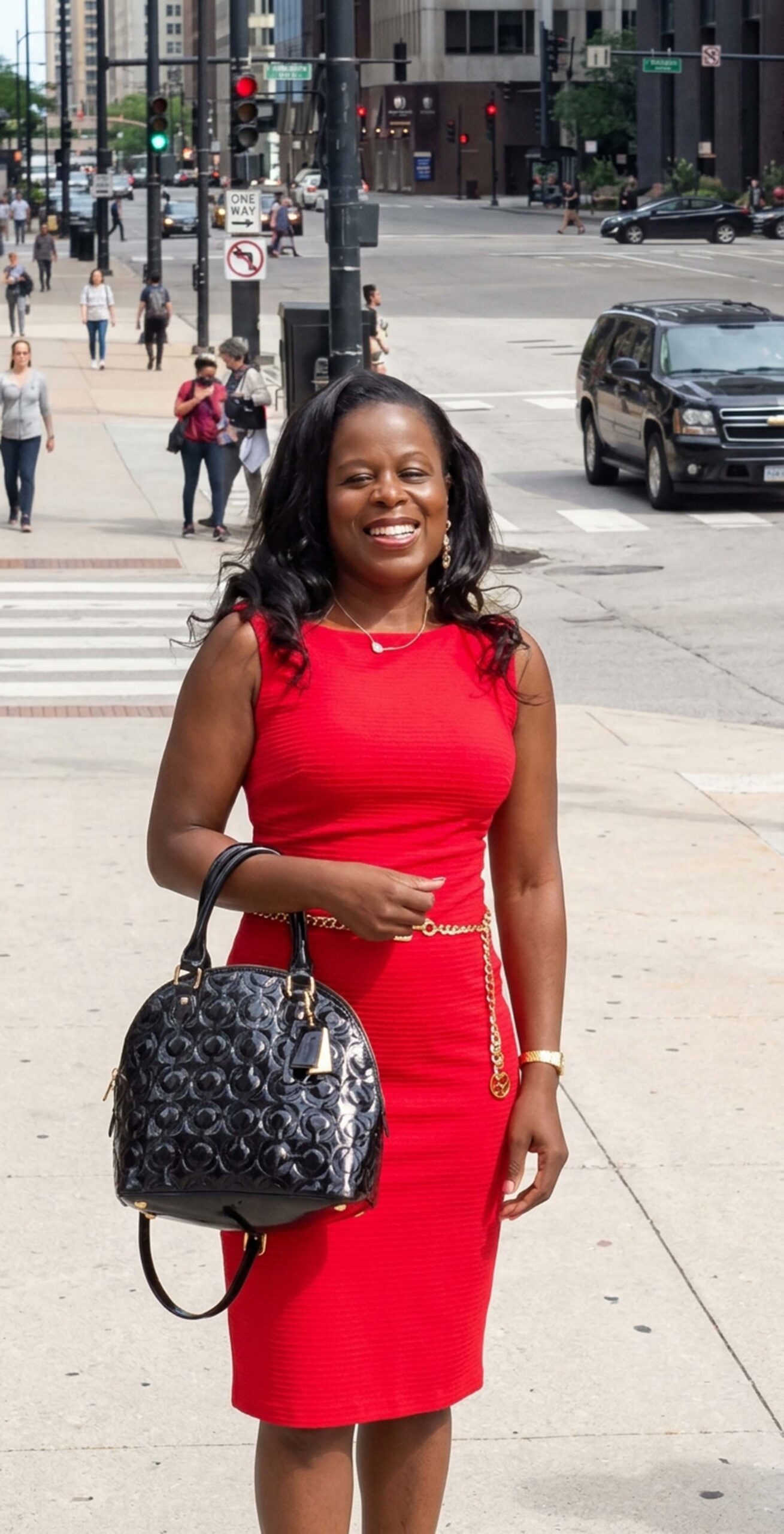
Ronda Payne
Questions by Savannah Cantrell. Recorded in June 2025 and sent by Ms. Payne to ETHOS and the Institute; not previously published. Edited for clarity, accuracy and length, with editorial updates added by ETHOS.
Editor’s introduction
Christopher “Chris” Payne, a U.S. citizen who had been living in Japan, was arrested on 25 November 2021 on suspicion of sexual assault. On 9 July 2024 the Chiba District Court convicted him and sentenced him to eight years’ imprisonment, crediting 630 days of pretrial detention. Chris has consistently maintained his innocence. On 11 December 2025 the Tokyo High Court set that judgment aside and remanded the case to the Chiba District Court for a new trial. He has not been acquitted, and the case remains pending.
This conversation took place in June 2025, before the High Court’s ruling. It is a mother’s account and is published as such: the recollections and opinions are Ronda Payne’s own, and what she says about the case and about detention conditions reflects what she has been told or understands, not findings by ETHOS or the Institute. The interview was not conducted by an independent reporter, and ETHOS has not independently verified its content. Developments since the interview appear in a clearly marked editor’s update at the end. Details that could identify the complainant have been left out.
A close bond
How would you describe your relationship with your son?
Chris is my only child, and we are very close. We talked all the time. When people got involved in his case in Japan, many of them told me how often Chris spoke about his mom. I love my son, and he loves his mother. When he visited in 2021 he sat down and played the piano for his grandmother, and that is one of the ways I remember him. His grandmother is his number one supporter and a huge fan of his music.
You speak in the past tense. Do the two of you still talk?
Not the way we used to. We have not been able to speak by telephone since his arrest, and as I understand it he is not permitted to make calls, so we rely on letters. When I travelled to Japan in January 2023, I was able to see him for 30 minutes through a glass partition. An interpreter was needed for the officer present, and a friend helped us as a favor. The last time I hugged him was on 30 May 2021.
The phone call
Can you walk me through the events?
It was Thanksgiving 2021 and I was cooking dinner. A number from Japan appeared on my phone. Chris and I normally do not talk by phone; we used FaceTime or Messenger, so my heart sank. It was Chris’s boss. He said, “Chris asked me to call you to tell you he has been arrested.”
I did not know what he was accused of. Within a day or two I found the contact details of the U.S. Embassy in Japan and called them myself. I understood from my communication with the Embassy that he was being held in Chiba, and I was told that details would have to come from his lawyers. I learned that Japanese procedure allows a suspect to be held for up to 23 days before being charged, so I knew this would not be resolved quickly. I was trying to understand how that applied to Chris’s case. My sister and I began researching the law and the process.
For weeks I had almost no information. His friends in Japan visited him and reported back to me. Gradually my focus shifted from what had happened to how he was doing, and I asked everyone who could to check on him.
Distance, letters and the embassy
Letters between us took three to six weeks to arrive. Even now, when a letter comes, I have to remind myself that what he describes may no longer be true by the time I read it. I used to react as though he had written it that morning, and I would call the embassy in a panic.
The U.S. Embassy has been helpful within its role. Staff visited Chris about once a month, accepted my letters even though this is not their usual practice, and took my calls when I was worried, even at odd hours because of the time difference. As far as I understand, his mail is reviewed, and at times parts of what I sent did not reach him. As I recall, Embassy officials told me that mail may be read but should not be withheld from him.
At the start, Chris chose a public defender so that our family would not have to bear the cost of a private lawyer. An attorney who met him early on told him he thought the case was weak. Later, his defense team changed, and Innocence Project Japan became involved with Chris’s agreement. That is why I was able to travel to Japan in January 2023. In Tokyo, his new lawyers told us they believed the prosecution’s evidence was weak.
I have also asked the embassy and his lawyers to make sure he can see a doctor whenever he needs one, and they have responded when I raised concerns.
Life on the inside, as far as I know
Chris told me the winters in the facility are very cold, so I sent him warm clothing until he asked me to stop. As I understand it, the lights in his cell stay on at night. I do not know the full extent of what he has been through, and I am not sure I want to. I have not seen his conditions myself. I rely on his letters and on what people involved in the case tell me.
He reads a great deal, taught himself Greek and does what he can to keep his mind active. Some of his letters were very heavy, and those were the hardest for me to read. We also found ways to lighten things. We both love the movie “Heavyweights,” and he would slip references to it into his letters, which told me how he was really doing. I sometimes sent copies of a letter to several places because I did not know which would arrive, and he joked that he received the same letter three times.
The toll on a mother
Chris asked me to promise that I would stay well, and he promised the same. I kept that promise, though not always easily. Chris’s friends follow me on social media and report back to him, so I made a point of being visible, going out, laughing, living. Many days I would come home from work and simply fall apart at the door. I went through a very dark period and eventually sought counseling. I told the therapist I needed someone who would tell me honestly if I was not coping, because I am good at putting on a brave face.
It was painful that few people asked how we were doing or wrote to Chris. But I decided I would not let this make me bitter. I also missed birthdays, Mother’s Days and Christmases.
Where do you find strength?
In my faith. At the worst of it, I made a vow: if my son is helped, I will help others who are going through the same thing. Today I volunteer with an innocence project, working on other people’s cases while lawyers work on Chris’s. On the flight home from Japan, a song called “I Was Made With a Storm in Mind” helped me believe that this ordeal has a purpose. I still have hard moments, but not as heavy as before. And I know Chris has had people around him, friends in Japan who visited and supported him. I think of them as the angels who kept him company.
Reaching out for help
I called and wrote to everyone I could think of: the Department of State, human rights offices, officials in both the Biden and Trump administrations, organizations that support Americans held abroad, and members of Congress. Most replies told me, in essence, that the United States was aware of the case and that it was a matter for the Japanese legal process. Representative Frank Mrvan wrote letters on Chris’s behalf, and I am grateful for that. I wish I had known earlier what resources were available, and I wish there had been more public attention to the case. I have also felt abandoned by my country: no one offered assistance, and every door I approached seemed to close before it opened.
Members of Chris’s defense team shared documents concerning the analysis and interpretation of the DNA evidence. How did you feel when you read them?
I was angry, but also relieved that questions were finally being raised. I have always believed my son. At the same time, I feel for the woman at the center of this case and for her family, and I pray for them. I want the truth to come out through proper legal channels, whatever it is, and I would like to understand how things reached this point. I trust that in the end the truth will be established.
Does Chris hold dual citizenship?
No, he is only a U.S. citizen. I advised him never to give it up. His U.S. citizenship has enabled the Embassy to provide consular assistance and monitor his welfare, which has mattered enormously to us.
What comes next
What are you doing next?
At the time of this interview I was preparing a press package and planned to write to Indiana’s governor, Mike Braun. I had already sent the documentation to the Innocence Project. My aim is simple: I want people to look at the facts. Chris’s lawyers have told me that we may use the materials publicly, and I want everything to be available so that anyone can read it.
You have said you want to help other families. What do you have in mind?
I have started working on a foundation called “You Are Not Forgotten.” My goal, after Chris comes home and even while he is still there, is to help families, mainly those with a loved one held abroad, navigate the system. I have had to work my way through a great deal of red tape, and I have learned strategies and systems that could spare others some of that pain. I have also advocated for people held in facilities in the United States.
Some human-rights organizations and legal observers have raised broader concerns about Japan’s pretrial-detention practices, and I hope my son’s case will receive a fair and transparent process. I believe that whatever Chris is going through may one day help many other people, and I will stand beside him no matter what. Through all of this, I am a mother. I want Chris to know that I fought as hard as I could and that I will keep fighting. We still have his Christmas presents wrapped and waiting. When he comes home, we will celebrate.
Editor’s update: June 2025 – September 2026
Judgment set aside. On 11 December 2025 the Tokyo High Court set aside the Chiba District Court’s judgment and remanded the case for retrial. According to summaries of the ruling reviewed by the Institute, the court held that the Yamada Analysis could not be relied upon as evidence of the perpetrator’s identity while the identified issues remained unresolved, did not itself decide whether the expert’s edits to the analysis data were justified, and directed that the prosecution’s alternative DNA analysis be examined at retrial. ETHOS has not reviewed the full text of the judgment.
Not an acquittal. The retrial is pending. Chris remains presumed innocent and has not been acquitted.
Detention. According to his supporters and defense team, bail requests were denied, including on 17 December 2025 and 15 January 2026, and on 24 February 2026, when the Supreme Court rejected a special appeal concerning the denial of bail. According to consular information provided to Ms. Payne, Mr. Payne was transferred to the Chiba Detention Center on 24 July 2026, and U.S. consular officers visit him about monthly.
Retrial timing. According to information reported by defense counsel and reflected in consular communications provided to Ms. Payne, the retrial may not begin before April 2027 because of limited scheduling capacity for lay-judge trials. This has not been confirmed by the court.
Public advocacy. On 6 March 2026 Ronda Payne spoke about the case at the Foreign Correspondents’ Club of Japan in Tokyo. Innocence Project Japan has supported Chris since January 2023, and a support association continues to publish updates on the case.
U.S. offices. The offices of Senators Todd Young and Jim Banks told Ms. Payne that, because Mr. Payne is an adult, they need a signed Privacy Act release from him before they can act on his behalf.
Right of reply. ETHOS and the Institute welcome comment from the Chiba District Court, the prosecutors’ office and other bodies mentioned in this article.
Ronda Payne

Leave A Comment